
 Placeholder photo
LiveUnder NDAcorporate catering and lunch delivery
Corporate catering
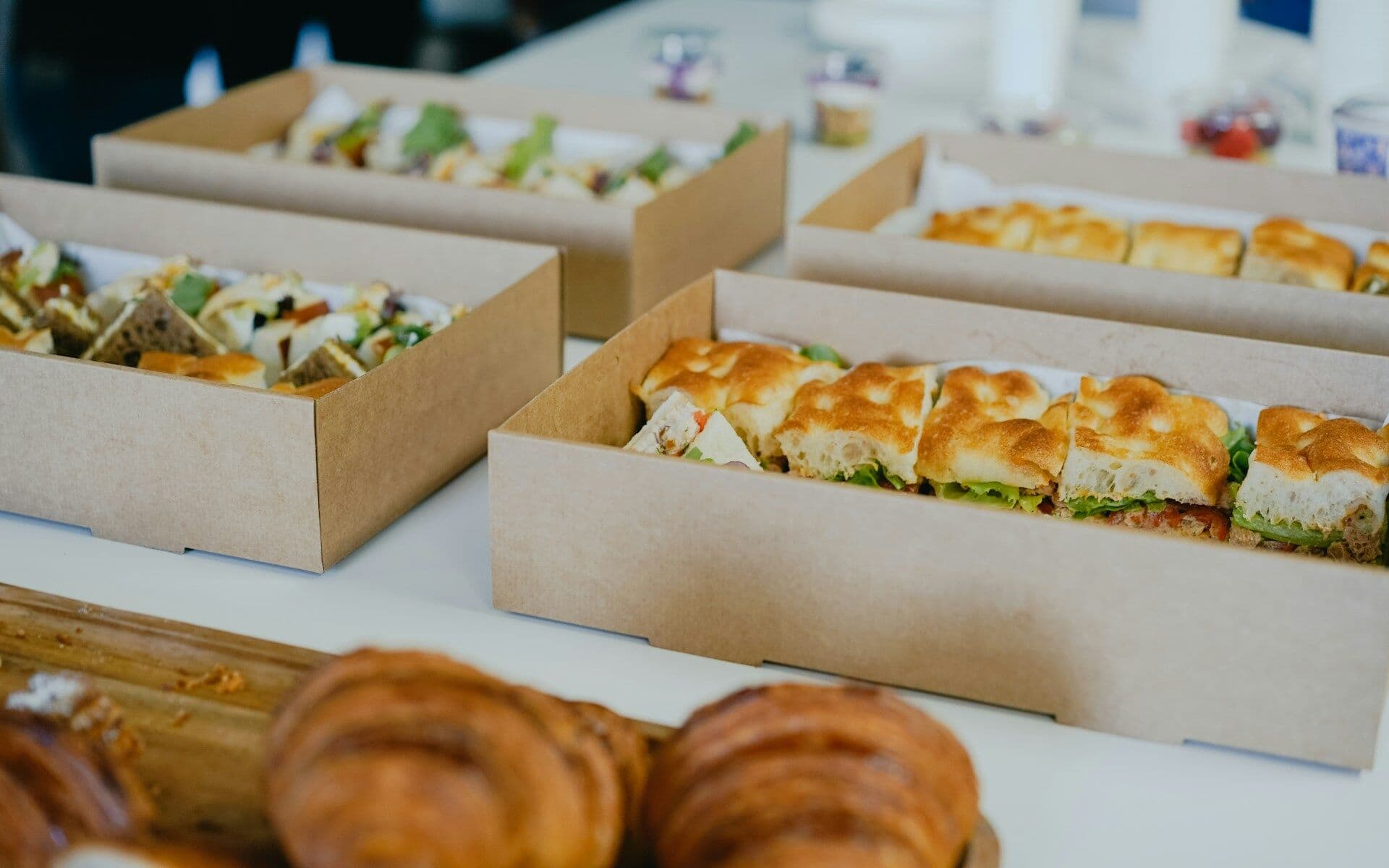
A corporate lunch platform: staff order a week ahead, the company sets the limit, the kitchen gets ready-made labels and sheets.
Service
We build online stores and online ordering around your range and process: a catalogue you manage yourself, a cart and payment, order statuses, documents for delivery and data exchange with your accounting. There is no separate online-store case study on the site yet — the same parts (a catalogue, orders, online payment with payment verification, delivery documents) are in the corporate catering case study.
Animation: products move from the shelves into a cart one by one, the cart turns into an order, and a “paid” mark appears on it.
Situations that bring people to us for this service.
A customer writes in a chat, a manager copies the order into a spreadsheet — and some get lost on the way.
The price depends on several conditions, there are limits, company-paid orders or an order cut-off — a ready-made platform can't do it.
Who has paid and who hasn't is worked out from the bank statement rather than seen in the order.
After an order, someone manually puts together lists for the warehouse, the kitchen or the courier.
You manage categories, products, photos, hidden items and prices in the panel, and the store takes them from there.
A cart, a delivery address or point, a comment and a clear summary before payment.
A payment service connected, with the system itself checking that the payment really went through.
Prices built from several conditions, limits and the “who pays” rule are calculated by the system, not a manager.
Every order is stored in the system with a status and a history; managers search and filter them in the panel.
Customers see their orders, and companies can have separate accounts with their own rules.
The system prepares spreadsheets for the warehouse or kitchen, labels and delivery lists itself — on a schedule if needed.
Products, prices and orders pass between the store and your accounting system without double entry.
The project path
Every step ends with a decision: go on or stop. We don't start the next one until the previous one has given its answer.
You describe the process and what gets in the way. We reply by email with questions and arrange a call.
We study the process with the people who work in it and write down what the system must change and how we will check it.
We build a working prototype of the key scenario to test the idea on real data rather than on polished screens.
We run the system in your real environment with agreed outcome criteria and a deadline. After the pilot we decide together whether to go further.
We bring it to daily use: reliability, access rights, links to other software, documentation, support. Then we develop it based on user feedback.
Systems where we have already done this kind of work.
Placeholder photoA corporate lunch platform: staff order a week ahead, the company sets the limit, the kitchen gets ready-made labels and sheets.
 Placeholder photo
A cleaning company website with a step-by-step price calculator, stored orders, and a panel where prices and content are edited.
If your process fits its template, use it. We are needed when you have your own rules: prices built from several conditions, an order cut-off, company accounts, a link to accounting.
In the corporate catering case study it is LiqPay, with a check that the payment really went through. We choose another payment service to fit your task.
Yes — exchanging data with what already works is one of our principles. What to pass across — products, prices, stock levels, orders — we decide during discovery.
There is no separate online-store case study on the site yet. The corporate catering case study shows a catalogue, ordering and online payment with payment verification.
Describe it in a few sentences: how things work today and what gets in the way. We reply by email with questions on the next business day.
Get in touch