 Placeholder photo
PrototypeProduct: TermoHubpolymer products manufacturing
Manufacturing tracking
Shop-floor tracking of finished goods: scan at the station, build the shipment in the app, keep working with no network.
Service
We build production tracking around your route: a scan at the work area, an item route with versioned rules, discrepancies with reasons, access to work areas and dispatch. Our basis is a working prototype of finished-goods tracking at a plant, connected to the plant's accounting system.
Animation: an item travels along a conveyor through three work areas, and the scanner arch lights up at each; a second item doesn't match its route and slides into a conflict tray, while the first reaches the dispatch container.
Situations that bring people to us for this service.
Movement of products relies on paper and verbal agreements.
The accounting system learns about the shift's result when it's too late to fix anything.
An item ended up in the wrong place — and the reason is found by talking to people.
The network drops, and operations aren't recorded or are recorded twice.
Work areas, operations, roles and checkpoints — together with the people on the shop floor.
The accounting system accepts the operation or returns the reason for rejection — and the person sees it at once.
The system knows which work area the item should reach next; route rules are versioned.
A route mismatch is recorded with a reason category instead of getting lost.
Staff are assigned to a work area by an approved request; only those assigned can change records.
A shipment with containers, a vehicle and a route sheet, a check before departure and a controlled return to loading.
Entry and exit through a guard's screen or by scanning a QR code on a tablet at the entrance.
Scans are stored on the phone and sent as soon as the connection returns — none counted twice.
The project path
Every step ends with a decision: go on or stop. We don't start the next one until the previous one has given its answer.
You describe the process and what gets in the way. We reply by email with questions and arrange a call.
We study the process with the people who work in it and write down what the system must change and how we will check it.
We build a working prototype of the key scenario to test the idea on real data rather than on polished screens.
We run the system in your real environment with agreed outcome criteria and a deadline. After the pilot we decide together whether to go further.
We bring it to daily use: reliability, access rights, links to other software, documentation, support. Then we develop it based on user feedback.
Systems where we have already done this kind of work.
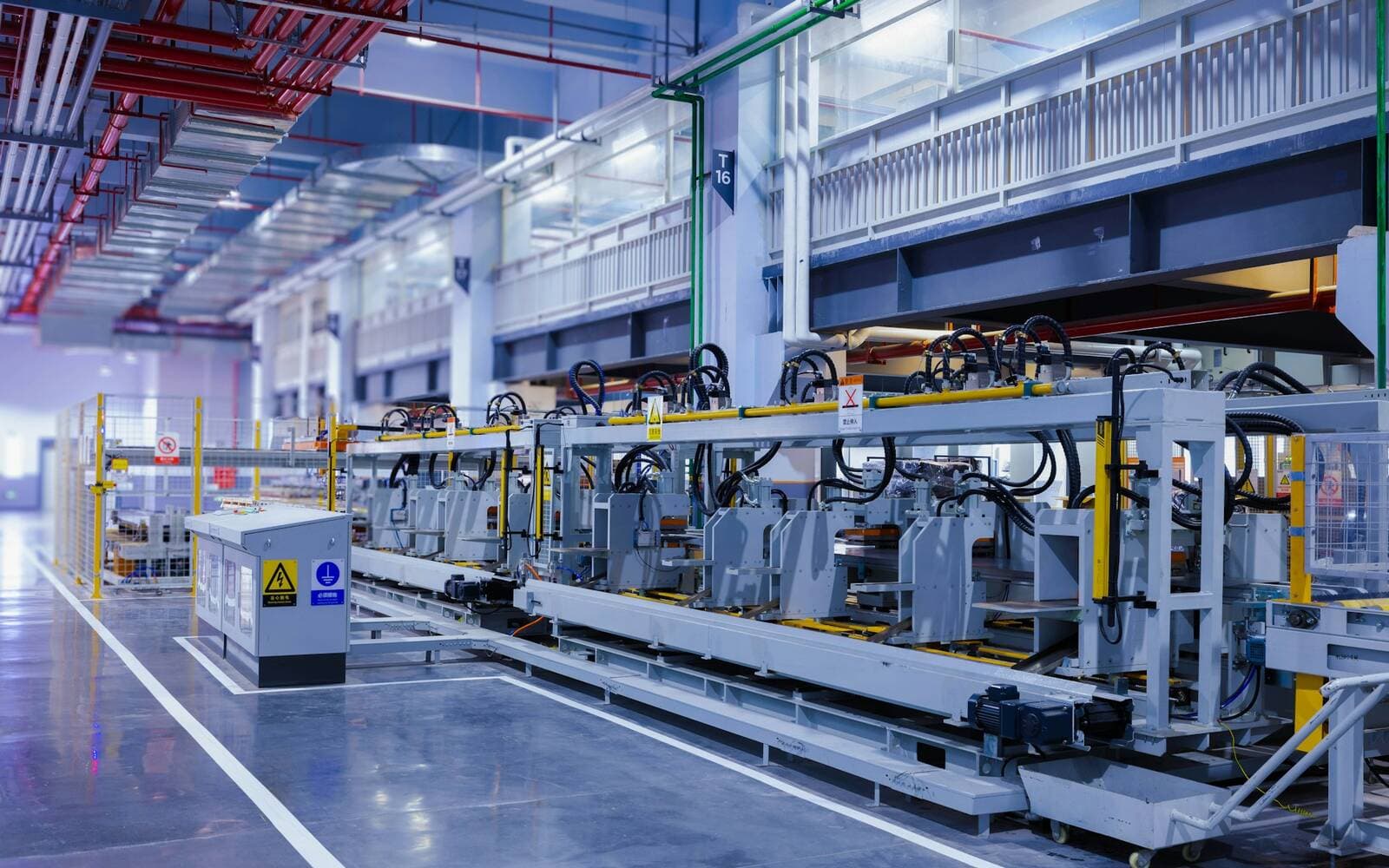
Placeholder photoShop-floor tracking of finished goods: scan at the station, build the shipment in the app, keep working with no network.
No, it complements it. In the plant case study the app exchanges data with the plant's accounting system: staff, barcodes and operations sync.
Yes. First a prototype at one work area, then a pilot, and only after that do we decide together whether to extend it.
Work doesn't stop: scans are stored on the phone and sent as soon as the network is back. A rejection shows up on the screen — it isn't lost.
Yes: two projects for manufacturers — clothing and gift packaging — are in development now. They are under NDA, so the site shows only the industry and stage.
Describe it in a few sentences: how things work today and what gets in the way. We reply by email with questions on the next business day.
Get in touch